It’s 2 PM on a Saturday afternoon in 1986, and my uncle and I make our way past the burger stands and knock-off scarf stands on Gillespie Road, the aroma of fried onions heavy in the late autumn air. Then we join the line at the ticket window; £5 for him and £2.50 for me, as a Junior Gunner member.
In through the heavy metal turnstiles, and up the steps to enter the terraces. That moment, as you reach the top and see the bright green pristine turf of Highbury, sends tingles through your scalp. You’re about to watch The Arsenal grind out a 1-0 win.

Things have moved on in the football world since then, at least in the top tier; satellite TV companies, bidding wars for TV rights, billionaires, and oil-rich states invested in clubs.
At the top of the game, players earn generational wealth annually. New stadiums were built. The Hillsborough tragedy put an end to unassigned seating and standing-only terraces.
But the feeling of going to a game? That hasn’t changed so much. So what do you need to know about going to watch the footie during your time in London? In this article, we’ll cover how to enjoy some live football, and what to do if there isn’t any on.
Jump to a section of this article
Timing Your Visit to London
The football league season in the UK runs from mid-August to late May. During the season, each team plays once or twice per week. Even-numbered-year summers are reserved for either the World Cup or the European Cup, usually mid-June to mid-July.
The league fixtures list is published in mid-June. Still, it is always subject to rescheduling due to TV station negotiations or if teams are involved in later stages of cup competitions. Changes for TV are usually +/- one day at worst.
League, Domestic Cups & European Competitions
League
League games are played throughout the year, with the league table based on points awarded for winning (3) or drawing (1) a game. The Premier League, or Premiership, has 20 teams, and each team plays all the others home and away for a total of 38 games.
Domestic Cups
Then we have the two domestic cups. These are knockout competitions. The FA Cup, the most prestigious of the two, is a single-round knockout competition open to all registered teams in England and Wales.
The Premiership teams come in at the 3rd round proper, but there are also pre-rounds. There is the potential for tiny clubs to make it through to those stages, and a victory by such a team against a much higher-ranked side is called a giant-killing.
They’re rare, but do happen when a big club underestimates an opponent and fields a weak side of reserve and youth players.
The League Cup, which is temporarily named after its commercial sponsor (the Carabao Cup), is open to teams in the top four divisions and, while it carries less cachet, is still keenly contested.
Cup game scheduling is harder to predict, of course, but most rounds during the main season have specific dates set aside.
European Competitions
There are a plethora of European competitions. The top level is the Champions League, followed by the Europa League and the Conference League.
Clubs qualify for European competition based on where they finish in the domestic league, and thanks to English clubs consistently ranking highly in Europe, the top 5 teams in the Premier League take part in European competition. All European competitions have a league/group stage, then a knockout stage.
European games are rarer but can be a good opportunity to get tickets for a game against a lesser European team that fans aren’t so interested in attending, especially after the group stage, since season ticket holders don’t automatically have a ticket without paying extra.
International Games
The English national side’s home ground of Wembley Stadium‘s 90,000 capacity doesn’t always sell out, especially for international friendlies or even in World Cup and European Cup qualifying rounds.
Where To See All The Fixtures at a Glance
The BBC Sports section is the most dependable source of information, combining fixtures from all competitions.
Getting Tickets
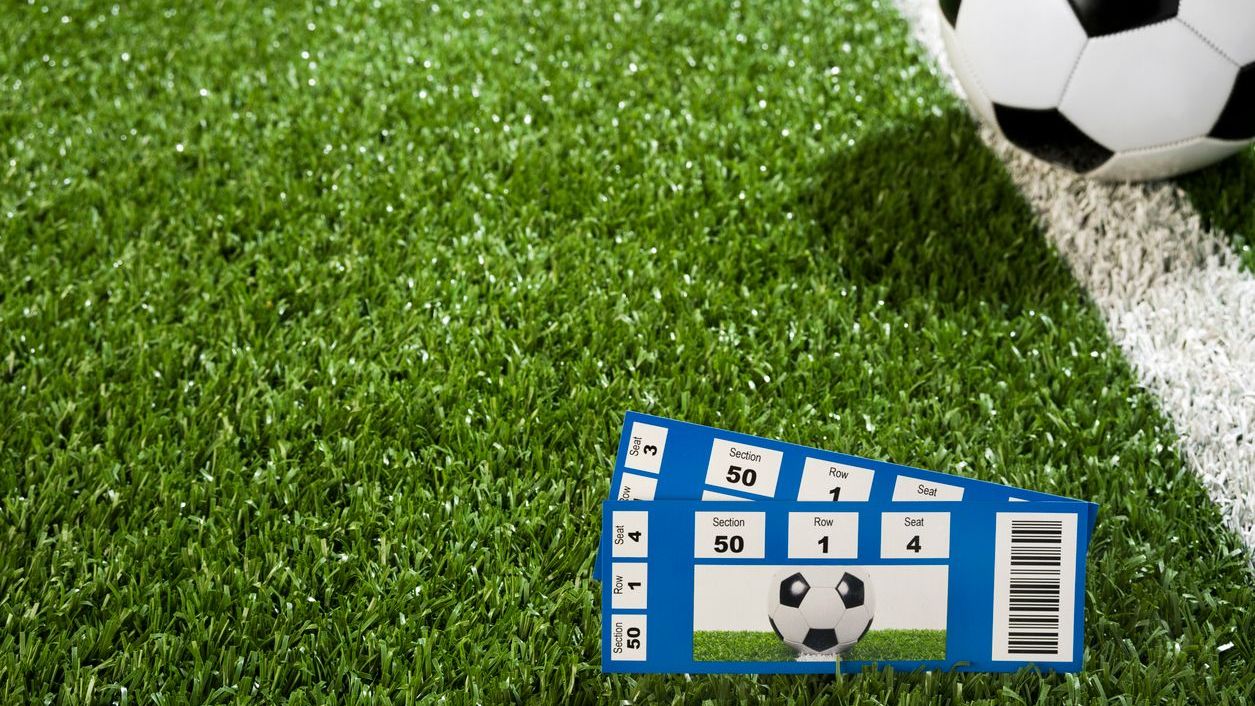
The best place to get tickets – at face value – is directly from the club’s website. Third party resale sites exist but are not sanctioned by the club. Club websites are the official channel for season ticket holders to sell seats for games they are unable to attend. Unless you’re trying to buy tickets to a sold-out game, always go to the club’s website directly. If you absolutely must see a particular game then try Ticketed or StubHub but expect to pay multiples of the original price.
The Opposition Dictates How Hard It Is To Get Tickets, and The Price
Games are price-categorized depending on the opposition. A big-name team means premium prices, so Arsenal vs Liverpool will cost more than Arsenal vs Bournemouth, for example.
Sold Out? There Are Alternatives
It can be hard to get tickets for the big team games, often requiring annual club memberships to have a chance in the ballot, making it hard for locals. Don’t show up to a sold-out game hoping to get a ticket from touts; you’re likely to pay way over the odds, and the ticket may be a fake or already used.
There Are More Teams in London Than Arsenal and Chelsea
At the time of writing, there are eight London teams in the Premiership (Spurs and/or West Ham might get relegated). The others are Crystal Palace (whose ground served as the home of AFC Richmond in Ted Lasso) and Brentford.
If you’re not fixated on seeing a particular team, these less popular teams provide a great opportunity to get the match-day experience at short notice. Non-local derby games usually don’t sell out, so it’s quite easy to get tickets on the day.
Hospitality Packages Might Be The Only Option
If you absolutely must see a big game, it’s worth checking the hospitality packages section on the club’s website.
A hospitality package typically combines a higher-priced seat with in-stadium dining in a reserved area (not a private box situation at all). This can range from £500 per person to much more, depending on the club or level of play.
Lean on Connections
If you’ve got a corporate job it’s worth checking whether any of your corporate partners sponsor premiership teams. Aside from the main shirt and ground naming sponsors there are sleeve sponsors and stadium advertising sponsors too. These sponsors often get an allocation of tickets, including much sought after hospitality package seats.
Support The Women’s Teams
The women’s game is growing. Thanks to impressive performances at the World Cup and their European Championship win, England’s Lionesses are undoubtedly part of the growing interest in women’s teams.
All Premier League teams have a women’s side; some, like Arsenal, have experienced considerable success in Europe.
Interest has grown so much that many of the women’s games are now played at the club’s main stadiums, no longer relegated to small grounds with a capacity of a couple of thousand; they’re packing in tens of thousands.
The atmosphere at women’s games is more relaxed; many people bring the whole family, availing themselves of tickets at a fraction of the price of a men’s team game.
Lower Leagues Rarely Sell Out
While the top tier of the game is awash with money, lower league teams often struggle to fill their small stadiums. The quality of the football won’t be the same, but the match-day experience will be closer to that of bygone days.
Dads are taking their kids to watch the team that their own father took them to watch. Fans of such teams deserve immense respect for following their local side despite success being rare.
The second tier of English football, the Championship, has three London sides: Millwall, Charlton Athletic, and Queens Park Rangers. Add in Watford, located outside London but within the capital’s orbital motorway, the M25, and only a short train ride away, and that makes four.
Tickets for Championship games are half the price or less of Premiership tickets and easy to buy at short notice.

At The Game
Where To Sit
This is more of a concern when you’re choosing a ticket in advance. The most expensive tickets are at the halfway line because you get the best view of the pitch. The corners are cheaper and give a good perspective, and the most vocal fans are usually at the ends (behind the goals), which are cheaper still.
All seats are pre-assigned, and you’ll usually be given an advised entrance. Keep in mind that away fans have a much smaller allocation of seats and are kept separate from home fans.
When To Arrive
Aim to get to the stadium about an hour beforehand. You’ll almost always experience some delays due to London’s traffic and the frequent weekend tube line and station closures for repairs. Don’t rely on Google Maps’ directions two days before; enter your approximate departure time and date.
What To Wear
Many fans will show up wearing replica shirts, often vintage ones from seasons past. If it’s cold, a warm coat is essential. Some stadiums have decent wet-weather coverage in the stands, but if you’re lower down and closer to the pitch, that’s not always the case.
What Not To Take
Take as little as possible with you. There are bag size limits, usually described as A4, the international paper size (about 8” x 12”). Any containers with water in them are not allowed. Large backpacks and luggage are banned, so please avoid them.
Eating & Drinking
Most stadiums in London have gone cashless, so use Apple Pay/Google Pay on your phone, or a contactless card, for frictionless food and drink purchases.
Unlike with US sports, alcohol is forbidden within view of the pitch, so that (overpriced) pint you just bought hoping to take to your seat will have to be chugged on the concourse before the steward lets you past.
The food on offer ranges from traditional options like a pie and pint to hot dogs, nachos, and burgers, as well as some healthier, plant-based choices.
How To Show Your Support
You can learn the team chants and songs by googling them. There’s no expectation to join in, but it can be fun to take part.
When To Leave
You might see some people making for the exits before the final whistle to beat the crowds out of the game. While you could do this, you’ll be missing out on several minutes, potentially defining moments, of a game you’ve gone to a lot of effort to see.
At most, it’ll take you 15-20 minutes more to get out of the stadium and onto public transport.
Out of Season Options
Stadium Tours Give You a Taste, If Not a Full Bite
If you want to experience the stadium environment just as much as seeing a game, stadium tours are a great option.
Available throughout the year, even on match days (though this is usually more expensive), a tour of the stadium will take you behind the scenes, visiting dressing rooms, the tunnel to the pitch, the team dugouts, and onto the side of the pitch itself. As well as club stadium tours, you can also tour ‘The Home of Football’, Wembley Stadium. Wembley hosts all major finals and is the English national team’s home ground.
Fan Zones & Sports Bars If It’s World Cup or European Cup Time
Not all football fandom is found in stadiums. If there’s a big international competition taking place elsewhere in the world, either the World Cup or the European Cup (both held every four years, in even-numbered years), head to a fan zone, a sports bar, or any pub showing the games to get into the atmosphere.
Larger venues will be better for neutral games (when England isn’t playing), as there’s a greater chance that some fans from the countries playing will be there. Having some Brazilians cheering on the Seleção always adds to the fun!
Friendly Tournaments
Arsenal annually hosts a friendly tournament, the Emirates Cup (named for its main sponsor), with Arsenal and three visiting European teams taking part over two days as part of their pre-season preparations. Other clubs do this on an ad hoc basis.
Watching a football game in London isn’t just another activity among so many others. It’s a guaranteed way to genuinely partake in local culture, which has been intertwined with this popular sport for decades.

Charlie is head of marketing at JayWay Travel. A long-term Prague resident, his interests are cooking, eating out, cycling, skiing and of course, travel.