The 2026 travel conversation keeps returning to one idea: slow down. Couples fresh off months of wedding planning are rejecting packed itineraries in favor of stillness, privacy, and trips that feel personal.
Travel advisors, hotel brands, and destination marketers have all started using the phrase Quiet Honeymoon to describe what newlyweds want.
Couples are gravitating toward destinations and properties designed for quiet, locations surrounded by nature, and resorts that offer space to settle in rather than rush between stops.
A new survey from JayWay Travel puts numbers behind the shift. Based on responses from 1,000 US adults across generations, income levels, and education backgrounds, the data paints a detailed picture of what romantic and relaxing means to today’s couples.
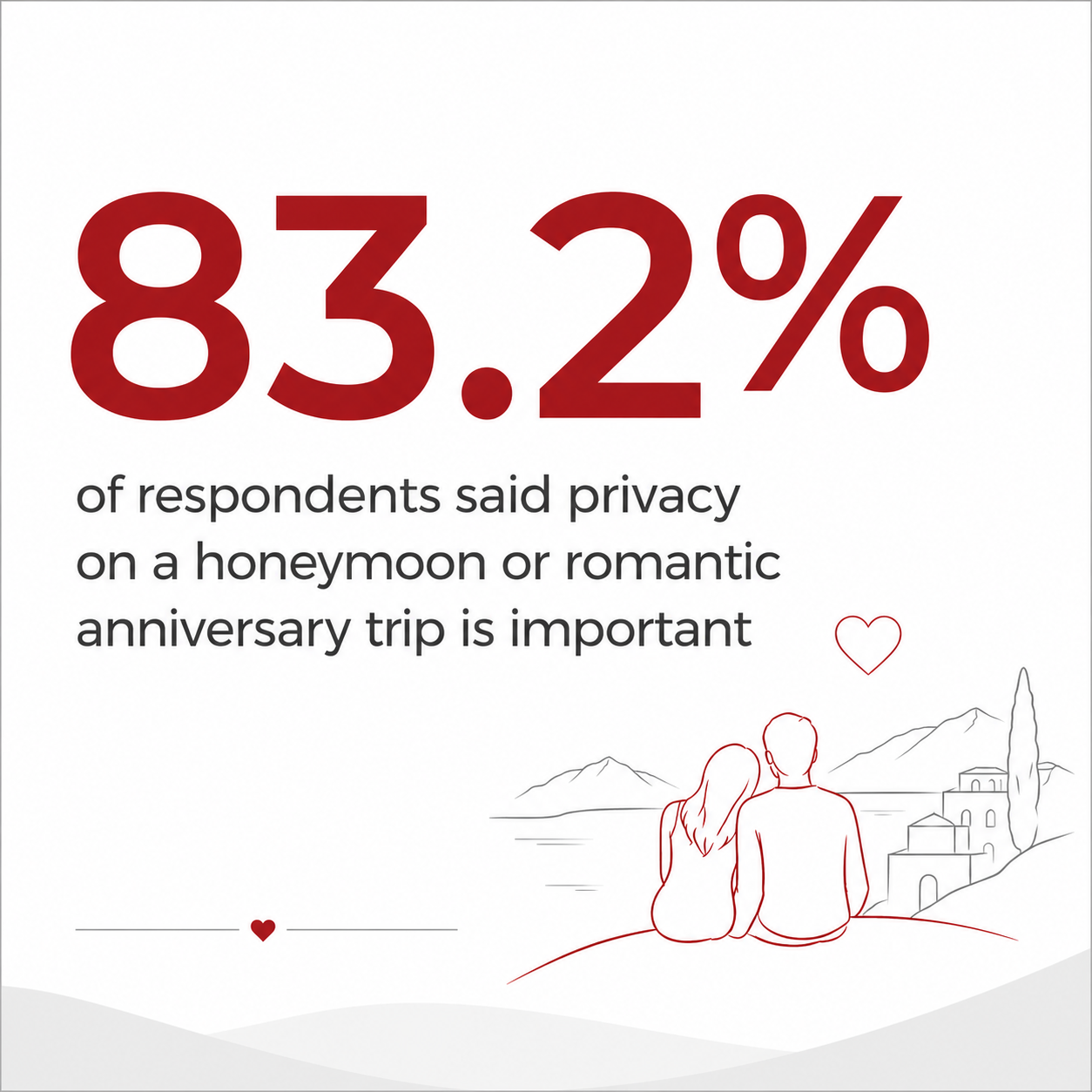
The central finding is clear: 83.2% of respondents say privacy is extremely or very important on a honeymoon or romantic anniversary trip.
The desire for calm is nearly universal. Where it gets interesting is how different groups define calm, what they are willing to pay for it, and where their visions collide.
The survey also exposes generational differences. Gen Z and Baby Boomers agree that romantic trips should feel private. They disagree on nearly everything else, from the role of social media to the ideal setting, the right pace, and what couples are willing to pay for solitude.
Jump to a section of this article
The Quiet Honeymoon Is Here & 83% of Couples Agree on What It Means
Key Findings:
- 83.2% of respondents say privacy is extremely or very important on a romantic trip, with Gen Z leading the “extremely important” category at 50%.
- 32.8% of Gen Z want a trip that looks great on social media, compared to 8.7% of Baby Boomers.
- 61.2% chose a private villa or suite with a pool or hot tub as the most romantic quiet honeymoon experience.
- 42.7% of couples prefer one home base, while 42.2% prefer two or three thoughtful stops. Women were more likely than men to favor staying put (46% to 40%).
- 44.1% of Gen Z say stunning views and scenery matter most, while 65.2% of Baby Boomers say quiet and privacy matter most.
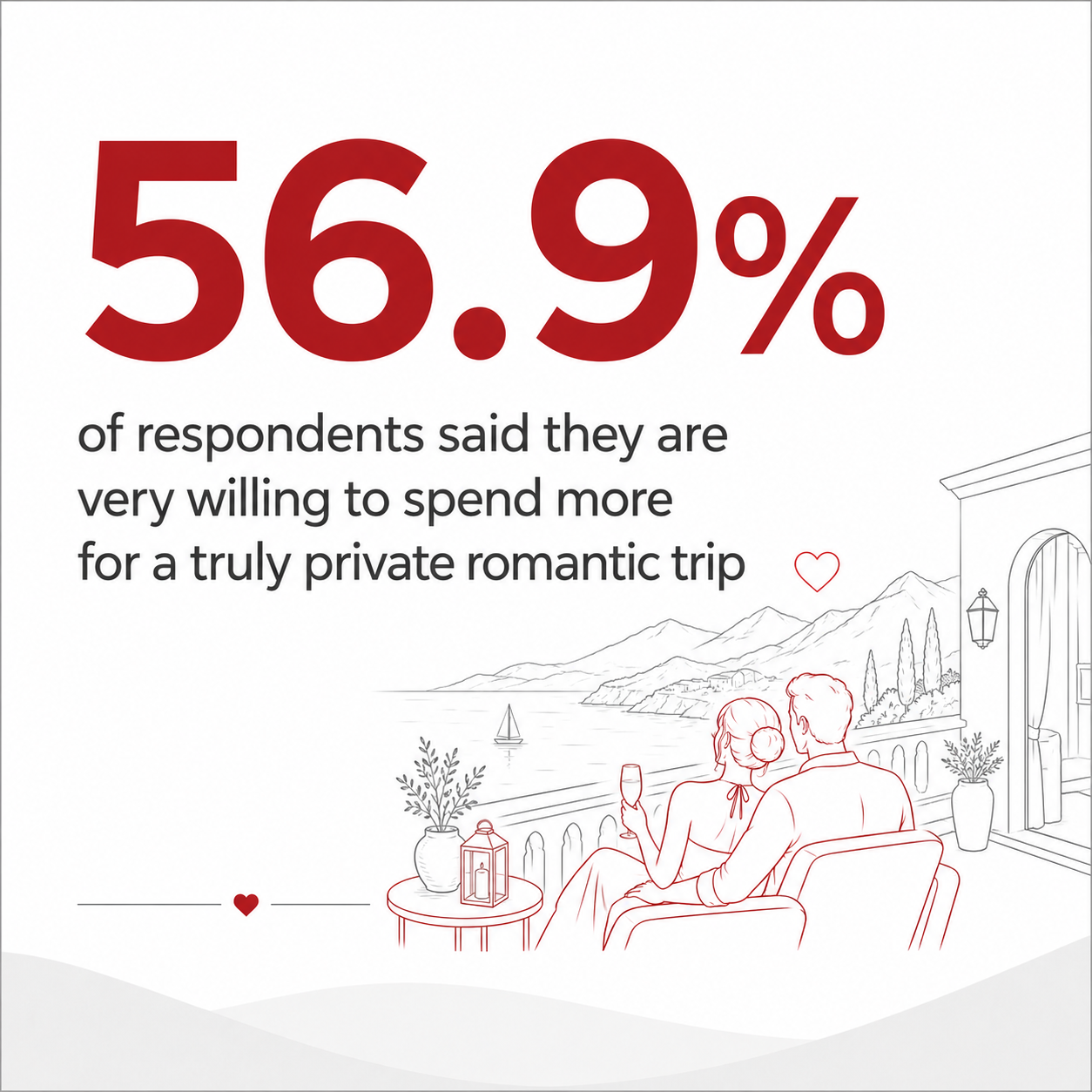
- 56.9% of respondents are very willing to spend more for a truly private romantic trip. Among men, that reaches 61.7%.
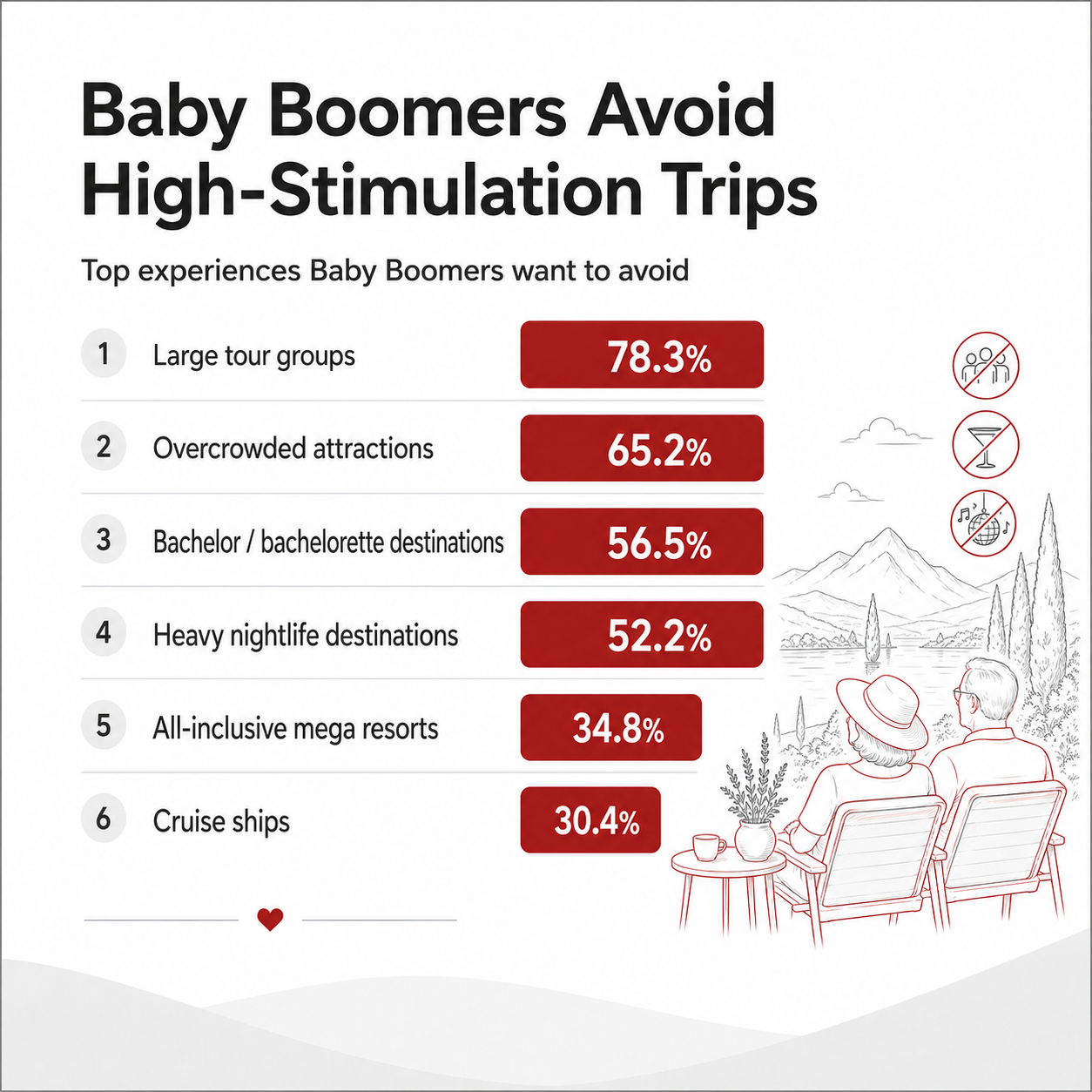
- 87% of Baby Boomers say family-focused resorts with children everywhere are a hard no for a honeymoon.
- 60.9% of Baby Boomers want no schedule at all on a romantic trip. Only 23.1% of Gen Z feel the same.
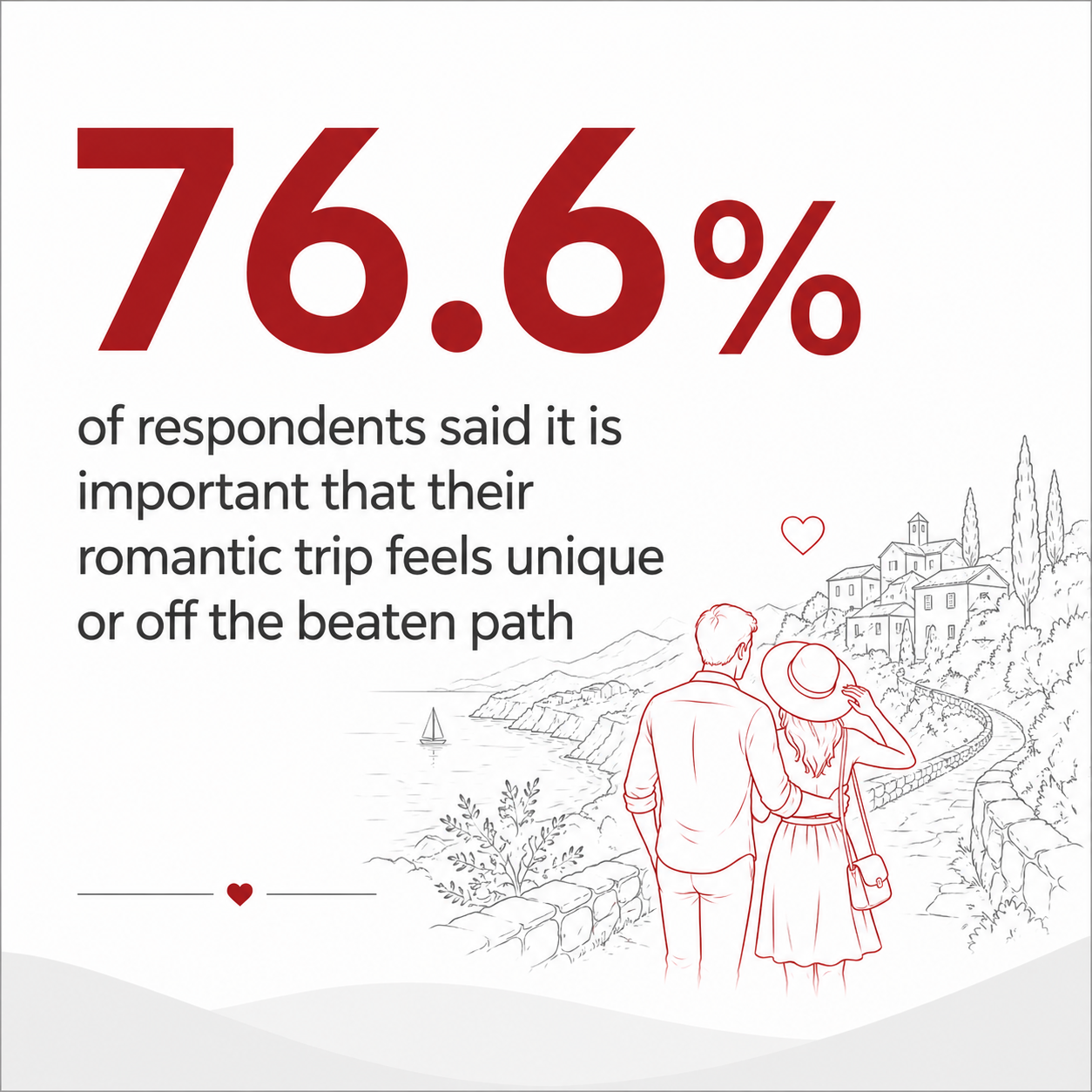
- 76.6% say it is extremely or very important that their romantic trip feels unique or off the beaten path.
Privacy Is the One Thing Every Generation Agrees On
When respondents were asked how important privacy is on a honeymoon or romantic anniversary trip, 83.2% said extremely or very important. That number held firm across age groups, income levels, and gender.
It is the closest thing to a consensus the survey produced. What stands out is that Gen Z leads the consensus. The generation most associated with sharing and social connection valued privacy as “extremely important” at 50%, ahead of every other age group.
This tracks with a broader cultural shift. Fox News reported on the growing demand for quiet travel, noting that people want to escape the busyness of everyday life and spend vacations in more relaxed settings that allow time for silence and introspection.
Although they value privacy, that doesn’t mean avoiding people online. In fact, Gen Z’s relationship with social media on romantic trips tells a different story entirely.
Gen Z Wants The Instagram Trip, But Boomers Are Running From It
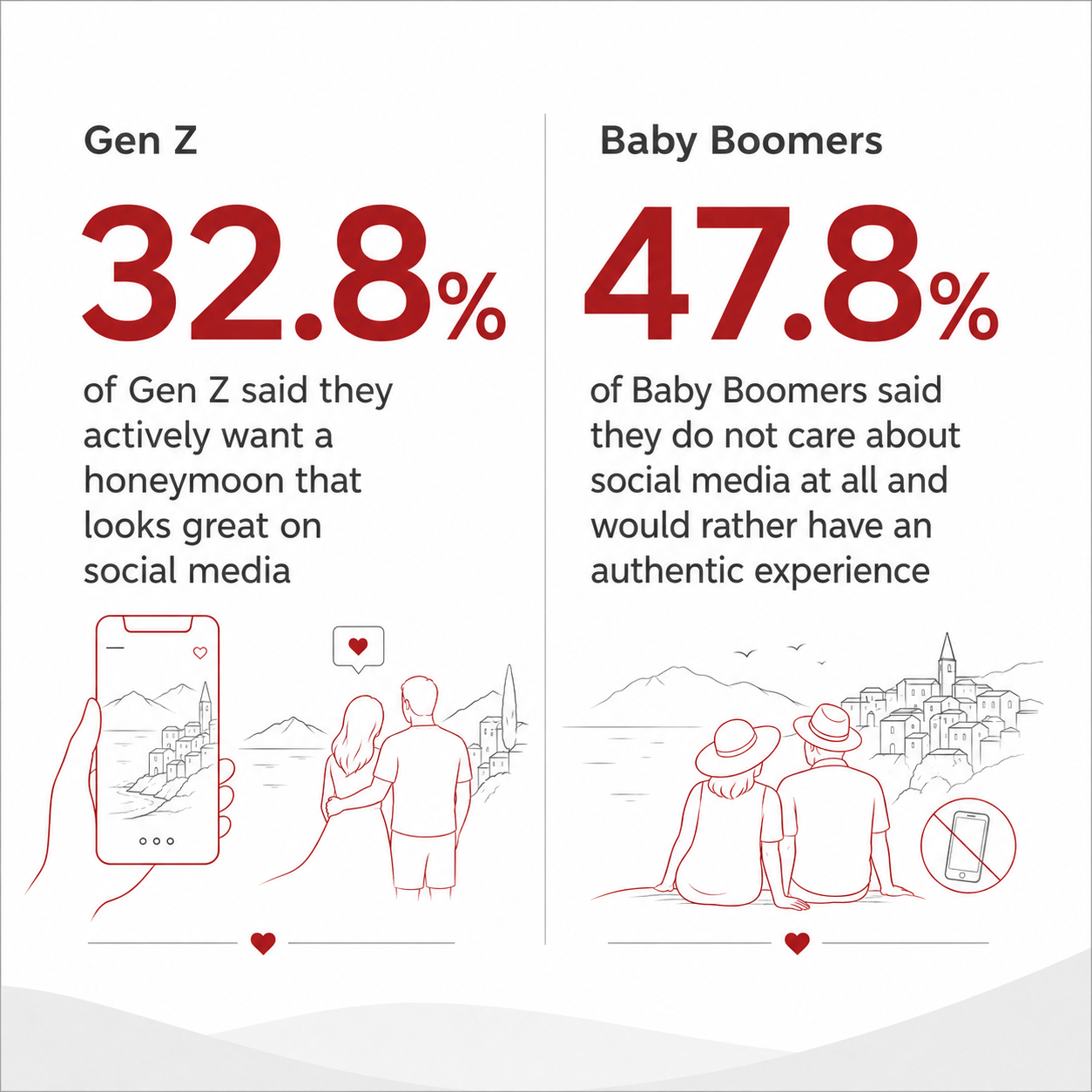
32.8% of Gen Z said they actively want a honeymoon that looks great on social media. Among men overall, 31% said the same, compared to 19% of women.
On the other end of the spectrum, 47.8% of Baby Boomers said they do not care about social media at all and would rather have an authentic experience.
The generational gap here is close to 40 points. For Gen Z, this is not vanity. It is how they process and share meaningful life events.
A 2025 Marketing Dive survey found that two-thirds of Gen Z travelers use social media for trip inspiration, and over 70% pick accommodations based on how photogenic or unique they are, according to research from visa platform Atlys.
For a generation that grew up documenting milestones on Instagram and TikTok, the visual story of a honeymoon is part of the honeymoon itself.
For Boomers, sharing is a distraction from the experience itself. Neither group is wrong; they are only operating based on their different relationships with technology.
The data does raise a planning question for couples with mixed feelings about social media: how do you design a trip that feels both private and shareable? That tension is real, and it requires more thoughtful planning than most couples expect.
The Private Villa Dream Is Universal
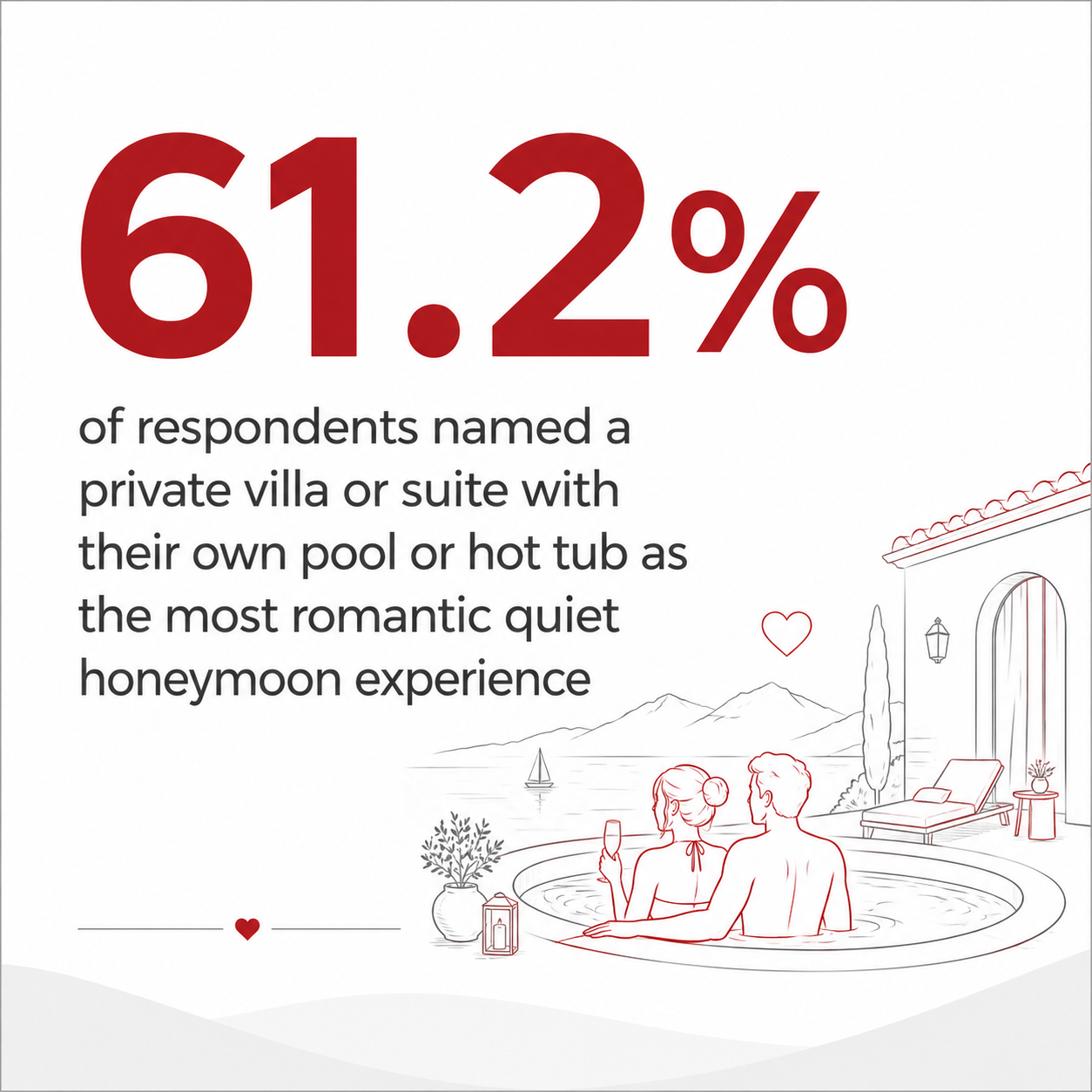
When asked to name the most romantic quiet honeymoon experience, 61.2% of respondents chose a private villa or suite with their own pool or hot tub. No other option came close. The second-place answer (a countryside escape) drew less than a third of the votes.
The dream is shared across demographics, including income level.
- Less than $25K: 58.3% chose the private villa.
- $25K to $49K: 58.3% chose the private villa.
- $50K to $99K: 57.5% chose the private villa.
- $100K to $249K: 69.7% chose the private villa.
- $250K+: 76% chose the private villa.
The preference tells us this: couples across the board want the same type of experience. Higher earners have easier access to private villas, but the demand is not limited to them.
That creates a real opportunity for travel companies to build private villa packages at a range of price points, meeting couples where they are rather than treating this as a luxury-only segment.
Women Want One Home Base While Men Want Multiple Stops
The survey asked couples whether they prefer one beautiful location with optional day trips or two to three thoughtful stops on a romantic trip. The overall results were nearly tied: 42.7% chose the single home base, while 42.2% preferred two or three thoughtful stops.
The gender split told a more specific story. Women leaned toward one home base at 46%, compared to 40% of men. Men were more likely to favor two or three thoughtful stops.
Women’s preference aligns with what the travel industry calls the Unpack Once philosophy, a slow-travel approach that favors comfort, reduced stress, and deeper immersion by staying in one location for several nights rather than hopping between hotels.
It minimizes the hassle of constant packing and checking out, maximizes time to enjoy a destination, and creates a home-away-from-home feeling.
Men, on the other hand, lean toward variety and movement. That difference creates a planning tension that has nothing to do with budget or taste. It comes down to how each person recharges.
For couples planning a romantic trip together, the negotiation between rooting down and roaming is often the first real conversation, and the data suggests women and men tend to start that conversation from different places.
His Honeymoon and Her Honeymoon Are Two Different Trips
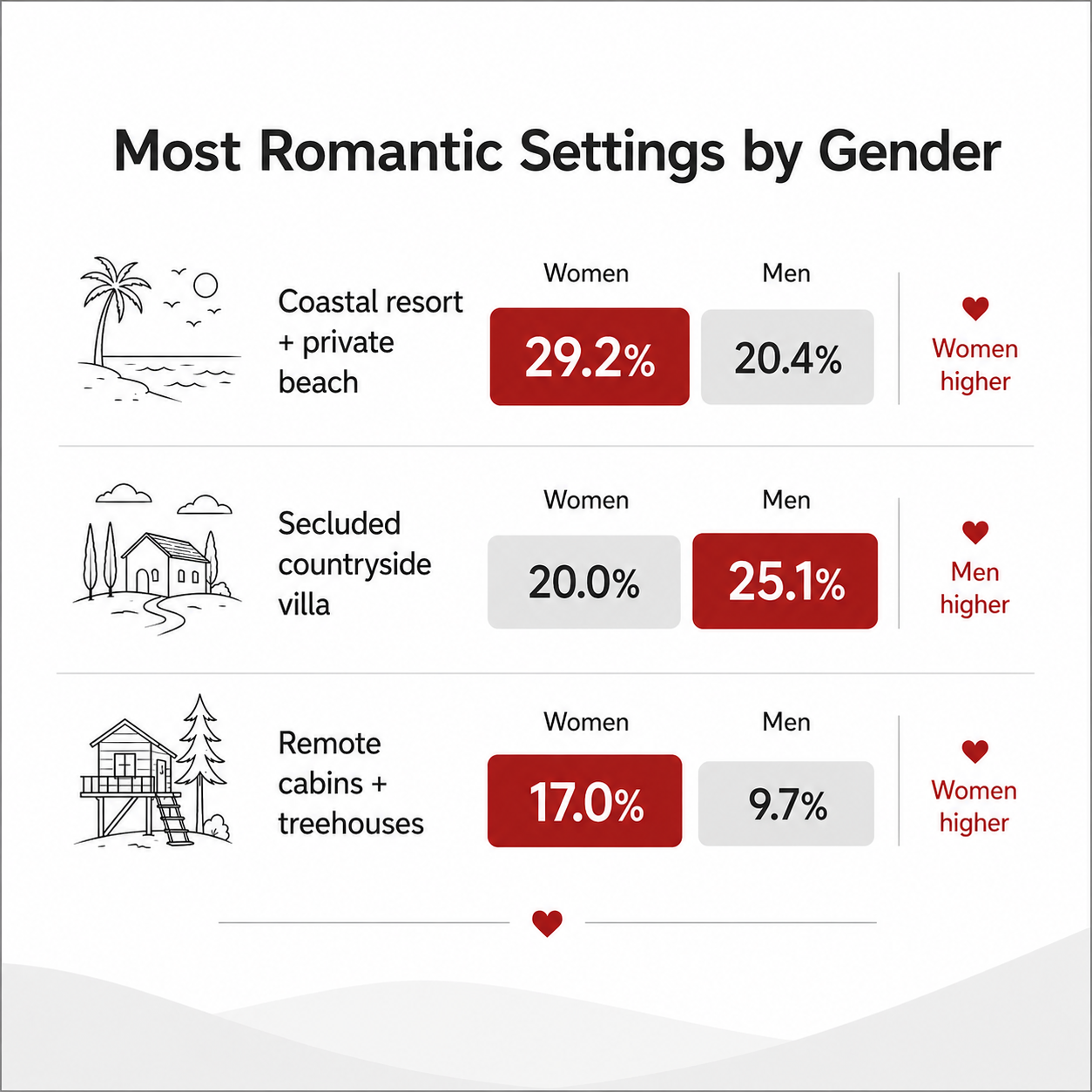
The survey revealed a consistent gender divide on the type of setting that feels most romantic. Women chose a coastal resort with private beach access at 29.2%, compared to 20.4% of men.
Men preferred a secluded countryside villa at 25.1%, compared to 20% of women. Remote cabins and treehouses skewed female at 17%, compared to 9.7% of men.
The setting choices reinforce the split in the itinerary. Men were more likely to favor two or three thoughtful stops on a romantic trip, while women leaned toward a single home base.
A coastal resort with beach access lends itself to staying put, relaxing, and unwinding in one place. A countryside villa suggests movement, exploration, and a more active pace.
Men appear to envision a honeymoon built around discovery and changing scenery. Women appear to envision one built around stillness and comfort. Both want escape, but the energy level in each person’s version of romance looks different.
For couples planning together, this is where the early conversations matter most. The data suggests women and men often start from different definitions of what a relaxing trip feels like.
Most Couples Will Pay a Premium For Solitude
56.9% of respondents said they are very willing to spend more for a truly private romantic trip. That number is high on its own, but gets higher among specific groups: 61.7% of men said the same, compared to 51.2% of women.
Among $250K+ earners, willingness to pay for privacy reached 76%. The willingness to invest in solitude reflects the value couples place on uninterrupted time together, especially after the stress of a wedding or during a milestone celebration.
Men expressing a stronger willingness to pay is notable. It suggests that for many men, the quality of a romantic trip is closely tied to exclusivity and seclusion.
For the travel industry, this points toward a pricing opportunity: couples are not looking for the cheapest option. They are looking for the option that delivers the most protected, personal experience.
Baby Boomers Don’t Want Kids, Crowds, or Noise Anywhere Near Their Honeymoon
Every generation in the survey agreed that family-focused resorts are something they would avoid on a honeymoon.
But no group expressed it as forcefully as Baby Boomers: 87% said a resort where children are everywhere is what they would most want to avoid. It was the single highest avoidance rate for any group on any item in the entire study.
The pattern does not stop at kids’ resorts. Baby Boomers showed strong avoidance across every high-stimulation option in the survey:
- 78.3% want to avoid large tour groups.
- 65.2% want to avoid overcrowded tourist attractions.
- 56.5% want to avoid destinations known for bachelor or bachelorette parties.
- 52.2% want to avoid party destinations with heavy nightlife.
- 34.8% want to avoid all-inclusive mega resorts.
- 30.4% want to avoid cruise ships.
The through line is clear. Baby Boomers are not reacting to one specific annoyance. They are rejecting any environment that feels loud, crowded, or overstimulating. For this generation, romance is defined by the absence of chaos.
A quiet restaurant, an empty beach, a villa with no one else around. The data suggests that when Boomers say they want privacy, they mean it in the broadest sense: no kids, no crowds, no tours, no noise.
Adults-only properties have seen rising demand in recent years, and this data helps explain why. Among older travelers, the demand for calm is not a preference. It is a requirement.
Boomers Don’t Want a Schedule. Gen Z Wants a Loose Plan.
When asked what would make them most relaxed on a romantic trip, 60.9% of Baby Boomers chose having no schedule at all: complete freedom each day.
Among Gen Z, only 23.1% felt the same. The most popular answer for Gen Z was a loose itinerary with key experiences built in, at 44.1%. This is another area where the generational divide comes down to how people define relaxation.
For Boomers, relaxation means the absence of structure. For Gen Z, it means having a plan they do not have to build themselves. Both approaches lead to the same destination: less stress. They arrive there differently.
This finding matters for travel advisors who specialize in romantic trips. The same couple, depending on their ages, needs a completely different level of structure to feel at ease.
Off the Beaten Path Is the Standard Now, Especially for Men
76.6% of respondents said it is extremely or very important that their romantic trip feels unique or off the beaten path. That makes off the beaten path less of a preference and more of a baseline expectation.
Men led the “extremely important” category by a wide margin at 38.8%, compared to 27.5% of women. Women were nearly twice as likely as men to say they are happy visiting classic romantic destinations. The desire for something different is widespread, but the intensity varies.
For men, the discovery element of travel appears to be more central to the romantic experience. For women, a familiar destination done well holds its own appeal.
Destinations like Croatia, Slovenia, and Portugal’s Alentejo region have all attracted attention in 2026 as alternatives to crowded classics, and travel companies that specialize in European itineraries are seeing that demand firsthand.
The data suggests the audience for these lesser-known places is large and growing, with men often leading the change toward the unfamiliar.
What the Data Tells Us About Romance in 2026
The survey’s 1,000 responses paint a consistent picture. Couples in 2026 want romantic trips that feel private, personal, and unhurried. They are willing to pay for that experience. They largely agree on what to avoid: crowds, children’s resorts, and over-scheduled itineraries.
Where they diverge, often along gender and generational lines, is in the details: the setting, the structure, the role of social media, and how much planning feels like too much.
The Quiet Honeymoon trend that travel media flagged at the start of 2026 is not a passing mood. This data confirms it is a measurable shift in what couples expect from romantic travel. Romantic does not mean one thing anymore.
A Gen Z couple saving for a villa with a view and a Boomer couple booking a last-minute countryside escape are both chasing the same feeling. They want time together without interruption. The packaging looks different. The core need is the same.
For anyone planning a romantic trip, the best starting point is an honest conversation between two people about what peace looks like to each of them.
Methodology
To understand how Americans approach romantic travel and honeymoon planning, we surveyed 1,000 adults across the country who are currently in a relationship or married.
Participants answered a series of questions about privacy preferences, ideal accommodations, travel pacing, social media, willingness to spend, and what they most want to avoid on a romantic trip.
Responses were analyzed by demographic groups, including gender, age, household income, and education level, to identify trends and disparities.
Fair Use Policy
Users are welcome to utilize the insights and findings from this study for non-commercial purposes, such as academic research, educational presentations, and personal reference.
When referencing or citing this article, please ensure proper attribution to maintain the integrity of the research. Direct linking to this article is permissible, and access to the original source of information is encouraged.
For commercial use or publication purposes, including but not limited to media outlets, websites, and promotional materials, please contact the authors for permission and licensing details.
We appreciate your respect for intellectual property rights and adherence to ethical citation practices. Thank you for your interest in our research.

Born and raised in Athens, Maria’s passionate about travel and storytelling, a combination that makes her ideal for her role as our content manager.